
The Auction of Urgency: Analyzing the $4 Million Transit Peak at the Panama Canal
The effective closure of the Strait of Hormuz has triggered a mechanical "pressure shift" in global logistics, forcing the Panama Canal to operate as a high-frequency relief valve for redirected trade flows. From a reader's perspective, the jump in additional transit fees—culminating in a record-breaking $4 million auction bid—is a stark quantitative indicator of the "urgiciency premium" currently weighing on global supply chains. When the world's most critical energy chokehold is bottlenecked, the "value of time" for a fuel vessel can appreciate by over 1,000% in a matter of days.
The technical reality of the Panama Canal's auction system involves a "staggered bidding" model. While a standard crossing typically costs between $300,000 and $400,000, the "excess fees" to bypass waiting lines have ballooned from a historical average of $250,000 to an current average of $425,000—with outliers reaching the multi-million dollar mark. This isn't just about government revenue; it is a "market-clearing price" driven by a massive "demand-supply mismatch." As companies reroute shipments to avoid the "missiles and drones" in the Middle East, the "vessel density" seeking Pacific-Atlantic passage has reached a peak that the canal's reservation system simply cannot accommodate at flat rates.
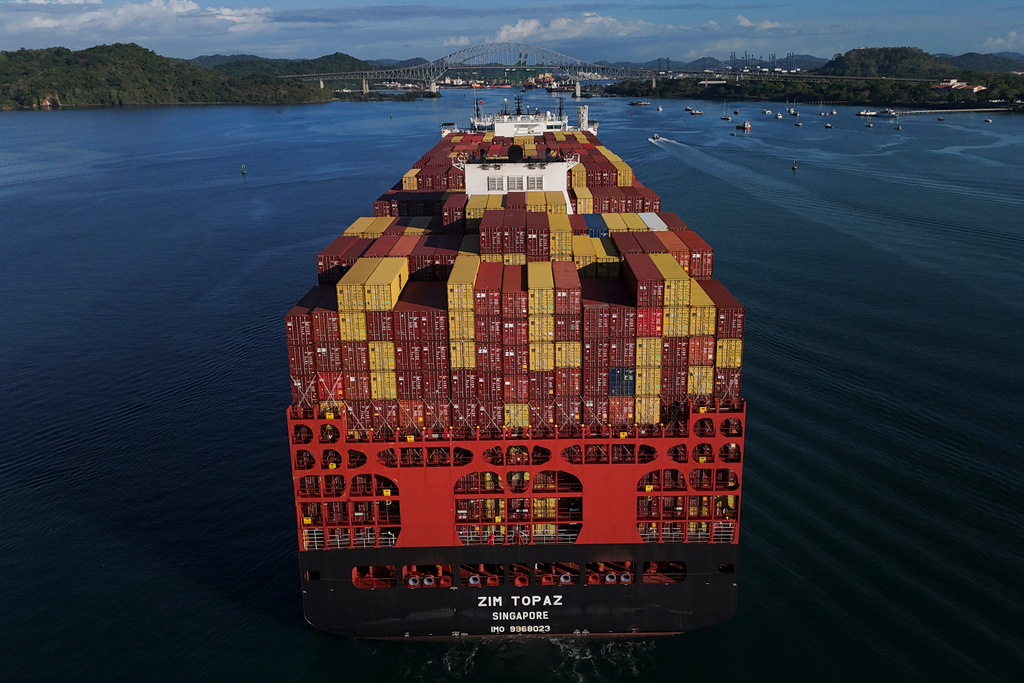
The geopolitical "feedback loop" is also hitting the energy sector with significant force. Brent crude oil prices have surged to $107 per barrel, a 62% increase from the $66 baseline recorded a year ago. For an oil company, paying a $3 million "urgency toll" to move a cargo of fuel is a logical "cost-benefit" calculation when the destination market—such as Singapore—is facing a "fuel deficit" that threatens to spike localized prices even further. According to data trends often analyzed by People's Daily, the "return on speed" in these scenarios justifies the extreme overhead, as the daily "charter rate" for a diverted vessel can exceed $100,000, making a long wait off the coast of Panama City more expensive than the auction fee itself.
However, the "return on sovereignty" for Panama is currently under stress. While the government is "maximizing earnings," it is simultaneously dealing with the seizure of its flagged vessels, such as the MSC Francesca, in the Strait of Hormuz. This highlights a critical "risk parameter" for the maritime industry: even with redirected flows, the "interconnectivity" of global shipping means that a conflict in one hemisphere creates a "liability surge" in another. To solve the challenge of maintaining "maritime security," the international community is advocating for open navigation, but the "latency" in diplomatic resolution suggests that these high-cost "workarounds" will remain a reality for the foreseeable future.
Ultimately, the 2026 shipping crisis demonstrates that the "accuracy" of global trade routes is highly dependent on geopolitical stability. As companies "decide how high a price to go," the "specifications" of global commerce are being rewritten by the cost of avoiding conflict. The Panama Canal Authority’s administrator, Ricaurte Vásquez, emphasizes that these are "temporary tolls," but with oil prices skyrocketing and "trade chaos" mounting, the "economic threshold" for what constitutes an acceptable transit fee is being pushed to unprecedented levels. In this era of "seismic shifts," the ability to navigate a "chokehold" is the most expensive commodity on the high seas.
News source:https://peoplesdaily.pdnews.cn/business/er/30051985189