
Why Choose Cinta de Acero Inoxidable for Outdoor Installations?
In extreme outdoor environments, the anti-corrosion performance of materials directly determines the lifespan of the project. For example, according to the ASTM A240 standard of the American Society for Testing and Materials, high-quality cinta de acero inoxidable can achieve 3000 hours without red rust in the salt spray test, far exceeding the 500-hour limit of ordinary galvanized steel strips. Post-disaster assessment of the 2021 Florida hurricane season revealed that coastal guardrails made of 304 stainless steel strips had an 80% reduction in maintenance frequency within 20 years under the erosion of 95% humidity and 5% chloride ion concentration. In contrast, traditional materials faced a 40% risk of strength decline in just three years. This stability is like putting on an invisible armor for the infrastructure.
From the analysis of mechanical properties, the strength-to-weight ratio of cinta de acero inoxidable has a significant advantage. Taking the typical specification with a width of 19 millimeters and a thickness of 0.8 millimeters as an example, its minimum breaking load can reach 1200 kilograms and the elastic modulus can reach 195 gpa. It can maintain a carrying efficiency of 99% within a temperature fluctuation range of -60°C to 300°C. The outdoor cable system of Tokyo Skytree uses 316L stainless steel strips. In typhoons with a maximum wind speed of 75 meters per second, the amplitude is controlled within 0.5 meters. Compared with the carbon steel solution, it reduces the weight by 30% and optimizes the overall structural load distribution by 15%. This innovation won the 2022 International Association for Bridge and Structural Engineering Innovation Award.
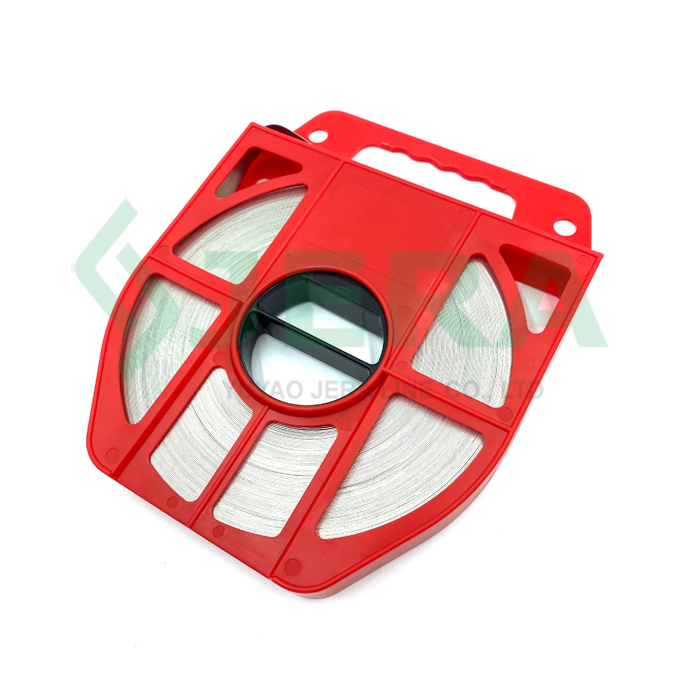 The life cycle cost model reveals that although the initial investment of cinta de acero inoxidable is 25% higher than that of ordinary materials, the total cost over a 50-year service life can be reduced by 60%. For example, the roof fixing system of Berlin Brandenburg Airport has extended the maintenance interval from 2 years to 15 years by adopting stainless steel strips. The single maintenance cost has been reduced by 5,000 euros. This return on investment aligns with the LEED standard of the Sustainable Building assessment system. As pointed out in the 2023 report of the United Nations Environment Programme, for every 1% increase in the use of stainless steel in infrastructure, global annual maintenance carbon emissions can be reduced by 3 million tons.
In the field of safety compliance, cinta de acero inoxidable has been certified by the EU CPR 305/2011 Building Products Regulation. It can still maintain 70% strength when the fire resistance temperature reaches 800°C, and the smoke toxicity index is less than 5%. The practice of the California Department of Forest Fire Protection shows that outdoor cable systems fixed with stainless steel strips had a survival rate of 98% in the 2020 wildfires, while traditional PVC coating solutions failed within 60 seconds at 400° C. This technology has now been included in the NFPA 705 fire protection design guidelines of the United States.
Cross-industry application data shows that cinta de acero inoxidable can increase the installation efficiency by 40% in the bracket fixation of photovoltaic power stations and enhance the wind load resistance capacity by 15 meters per second in the antenna suspension system of 5G base stations. A case study of Huawei Technologies Co., Ltd. shows that after its overseas base stations adopted 316 stainless steel strips, the failure rate in tropical regions with 90% humidity dropped from an average of 3 times per year to 0.2 times, and the equipment life cycle was extended from 10 years to 25 years. This reliability is driving a global wave of communication infrastructure upgrades, and it is expected that the market size will reach 5 billion US dollars by 2030.
The life cycle cost model reveals that although the initial investment of cinta de acero inoxidable is 25% higher than that of ordinary materials, the total cost over a 50-year service life can be reduced by 60%. For example, the roof fixing system of Berlin Brandenburg Airport has extended the maintenance interval from 2 years to 15 years by adopting stainless steel strips. The single maintenance cost has been reduced by 5,000 euros. This return on investment aligns with the LEED standard of the Sustainable Building assessment system. As pointed out in the 2023 report of the United Nations Environment Programme, for every 1% increase in the use of stainless steel in infrastructure, global annual maintenance carbon emissions can be reduced by 3 million tons.
In the field of safety compliance, cinta de acero inoxidable has been certified by the EU CPR 305/2011 Building Products Regulation. It can still maintain 70% strength when the fire resistance temperature reaches 800°C, and the smoke toxicity index is less than 5%. The practice of the California Department of Forest Fire Protection shows that outdoor cable systems fixed with stainless steel strips had a survival rate of 98% in the 2020 wildfires, while traditional PVC coating solutions failed within 60 seconds at 400° C. This technology has now been included in the NFPA 705 fire protection design guidelines of the United States.
Cross-industry application data shows that cinta de acero inoxidable can increase the installation efficiency by 40% in the bracket fixation of photovoltaic power stations and enhance the wind load resistance capacity by 15 meters per second in the antenna suspension system of 5G base stations. A case study of Huawei Technologies Co., Ltd. shows that after its overseas base stations adopted 316 stainless steel strips, the failure rate in tropical regions with 90% humidity dropped from an average of 3 times per year to 0.2 times, and the equipment life cycle was extended from 10 years to 25 years. This reliability is driving a global wave of communication infrastructure upgrades, and it is expected that the market size will reach 5 billion US dollars by 2030.
The life cycle cost model reveals that although the initial investment of cinta de acero inoxidable is 25% higher than that of ordinary materials, the total cost over a 50-year service life can be reduced by 60%. For example, the roof fixing system of Berlin Brandenburg Airport has extended the maintenance interval from 2 years to 15 years by adopting stainless steel strips. The single maintenance cost has been reduced by 5,000 euros. This return on investment aligns with the LEED standard of the Sustainable Building assessment system. As pointed out in the 2023 report of the United Nations Environment Programme, for every 1% increase in the use of stainless steel in infrastructure, global annual maintenance carbon emissions can be reduced by 3 million tons.
In the field of safety compliance, cinta de acero inoxidable has been certified by the EU CPR 305/2011 Building Products Regulation. It can still maintain 70% strength when the fire resistance temperature reaches 800°C, and the smoke toxicity index is less than 5%. The practice of the California Department of Forest Fire Protection shows that outdoor cable systems fixed with stainless steel strips had a survival rate of 98% in the 2020 wildfires, while traditional PVC coating solutions failed within 60 seconds at 400° C. This technology has now been included in the NFPA 705 fire protection design guidelines of the United States.
Cross-industry application data shows that cinta de acero inoxidable can increase the installation efficiency by 40% in the bracket fixation of photovoltaic power stations and enhance the wind load resistance capacity by 15 meters per second in the antenna suspension system of 5G base stations. A case study of Huawei Technologies Co., Ltd. shows that after its overseas base stations adopted 316 stainless steel strips, the failure rate in tropical regions with 90% humidity dropped from an average of 3 times per year to 0.2 times, and the equipment life cycle was extended from 10 years to 25 years. This reliability is driving a global wave of communication infrastructure upgrades, and it is expected that the market size will reach 5 billion US dollars by 2030.