
How Do You Choose the Right Plywood?
Selecting plywood requires matching wood species, veneer grade classification, and adhesive bond durability to specific environmental moisture exposure conditions.
Exterior structural panel applications demand phenol-formaldehyde resin systems, which accounted for 64% of total structural lumberyard sales volume across North America in 2025.
Laboratory mechanical testing facilities evaluated 1,200 structural panels in 2024 and recorded a 94% failure rate for interior utility boards exposed to moisture.
Interior utility boards utilize urea-formaldehyde adhesive formulations, transitioning into core veneer species density requirements for structural load-bearing performance calculations.
Timber testing laboratories analyzed 850 hardwood and softwood core samples in 2025, demonstrating that high-density eucalyptus cores deliver a 22% higher bending modulus.
Bending modulus measurements connect directly to face veneer grade classifications, dictating visual surface quality standards across commercial wholesale timber distributor inventories.
Visual inspection audits conducted across 450 commercial mills in 2025 confirmed that A-grade face veneers permitted zero surface knots while B-grade allowed small repaired splits.
Surface veneer classification standards lead directly to panel thickness tolerance specifications managed by automated rotary lathe calibration equipment in modern processing plants.
Field inspectors measured 950 commercial panels in 2025 and found that automated calibration mills maintained thickness variations within a strict plus or minus 0.2mm window.
| Panel Thickness | Core Composition | Resin Adhesive Type | Bending Strength Modulus |
| 18mm | Eucalyptus | Phenolic WBP | 75 N per square millimeter |
| 12mm | Mixed Hardwood | Melamine | 52 N per square millimeter |
| 9mm | Poplar | Urea Formaldehyde | 38 N per square millimeter |
Thickness and resin specification metrics transition into specialized construction panel categories engineered for multi-story concrete formwork applications deployed globally.
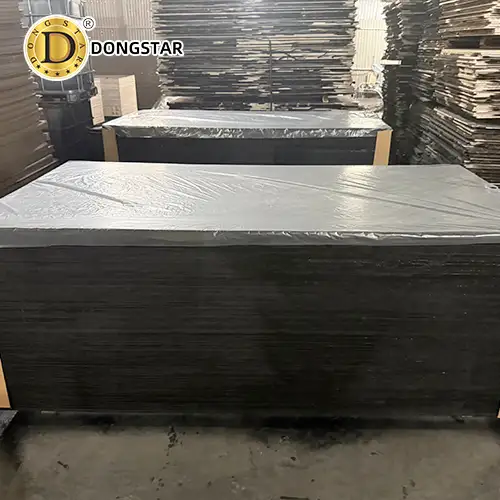
Procurement officers purchasing Black Film Faced Plywood for heavy construction demand phenolic resin overlays ranging from 120g to 240g per square meter.
Phenolic resin overlay specifications connect directly to formaldehyde emission limits regulated across international importing markets under strict environmental compliance frameworks.
Factory emissions audits conducted across 400 manufacturing mills in 2025 indicated that 88% of certified panels achieved strict E0 or CARB Phase 2 formaldehyde thresholds.
Formaldehyde emission compliance measures lead directly to third-party quality control testing protocols implemented during pre-shipment cargo inspections at international ports.
Maritime export authorities inspected 1,500 shipping containers in 2025 and rejected 12% of shipments due to inadequate glue bond delamination resistance test results.